Indigestion

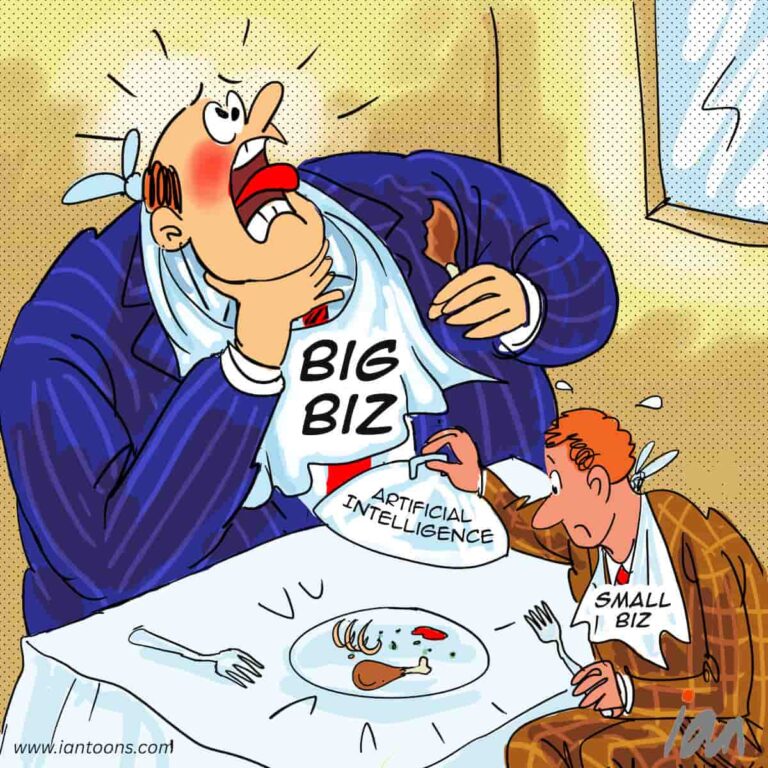
“Indigestion” – A cartoon that illustrates how AI’s value might keep pushing us to use it, but it’s also causing us to feel uncomfortable along the journey.
We disliked smartphones tracking our movements, but kept using the maps. Likewise, social networks collected information we would rather have kept private, yet leaving them meant losing connections we valued.
AI makes that tradeoff even more uncomfortable because we are embedding it deeper into our thinking. We share private doubts and unfinished business plans, inviting a company’s software into conversations we might hesitate to have with another person. The more context we provide, the more useful its advice becomes … even as we wonder how much influence it has over our judgement.
Last week, Jacob Coxon resigned from Anthropic after working at both Anthropic and OpenAI, accusing the companies of “racing straight to self-improving superintelligence and gambling with our lives.” Anthropic’s alignment science lead, Evan Hubinger, backed his warning, putting his personal estimate of AI killing all humans at greater than 10% within the next decade.
That same week, Douglas Yao shared a potential schizophrenia treatment developed with ChatGPT’s help, working from a garage laboratory. With AI assistance and laboratory robotics, he pursued drug discovery we normally associate with well-funded research teams. The compound has only been tested in cells and mice, but his work suggests how many more ideas for life-enhancing medicines might now get a chance to be explored.
Someone worried about AI’s growing power might also have a family member waiting for a treatment that doesn’t yet exist. We want safeguards, but we also want the next breakthrough, leaving us with the uncomfortable knowledge that the technology we fear could deliver something we cannot bear to go without.
9
–
1
Sources:
Karen Hanlon (Sep 15, 2026) – The Real Promise Of AI In Healthcare: Better Outcomes And Easier Experiences – Forbes
Mary Whitfill Roeloffs (Sep 14, 2026) – Dire AI Doomsday Warnings Are Everywhere—But What Could One Actually Look Like? – Forbes
Mary Whitfill Roeloffs (Sep 15, 2026) – The Rich Are Worried About An AI Apocalypse—But Experts Say It’s Already Hurting The Poor – Forbes
Find it on:
Charles Towers-Clark (Sep 23, 2026) – Why Fortune 500s Build 18,000 AI Agents And Keep Almost None – Forbes