Kool Kid

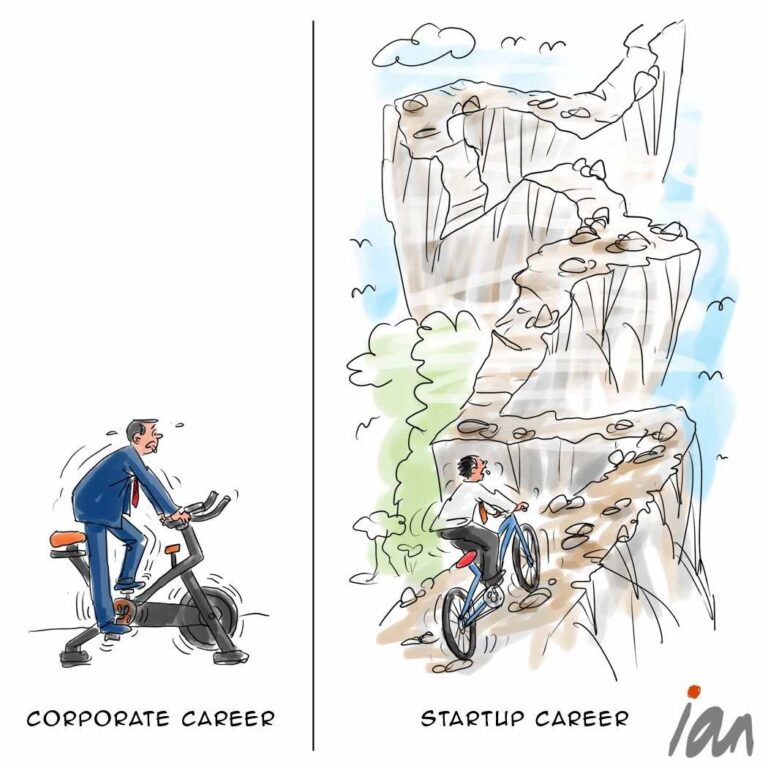
Kool Kid – A cartoon that illustrates how some tech bros just get product design totally wrong.
“It’s very easy to be different, but very difficult to be better.” Jony Ive’s remark should be pinned to the wall of every consumer hardware company, because it captures the trap smart people keep walking into when they mistake novelty, ambition and technical sophistication for product judgment.
Snap’s new Specs are a case in point. After more than a decade and roughly $3.5BN spent pursuing augmented reality, Snap produced a $2,195 standalone pair of glasses with a 51-degree field of view, dual processors, cameras, microphones, speakers, hand tracking and roughly four hours of battery life. Technically, that is impressive, but it’s commercially questionable. The problem is not simply that the glasses are bulky as an everyday consumer device, it’s that Snap is asking consumers to pay laptop money for a device less comfortable and far less obviously useful than the products they already own.
That pattern runs through a remarkable number of consumer hardware failures. Google Glass made wearable computing feel socially radioactive before it proved a mainstream use case. Humane’s AI Pin arrived at a premium price with an unclear proposition and underwhelming performance. Juicero became the classic example of a beautifully over-engineered machine built to solve a problem human hands had already solved.
What makes Snap’s misstep look even worse is that, in the very same week, another technology company demonstrated what a genuine understanding of customer need looks like. Midjourney, best known for image generation, unveiled a medical imaging product designed to deliver a full-body scan in 60 seconds, tackling a problem immediately understandable to any consumer. That is the difference between building around a device and building around a customer.
9
3
1
“This is a sharp analysis on the perils of mistaking novelty for true product improvement. Jony Ive’s quote, “It’s very easy to be different, but very difficult to be better,” perfectly encapsulates the challenge facing consumer hardware. Prioritizing genuine user value over technical impressiveness is crucial for market success.”

“I completely agreed with you up until the Midjourney piece, yes having faster/better/cheaper medical imaging is an obvious useful thing but I don’t trust Midjourney or some random LLM company to be the one to do it.
The smartglasses/VR/AR/whatever are solutions in search of problems and even if they weren’t by now the actual concept and idea would have taken off like wildfire if it was something people thought were useful. If you have to keep shouting and proving that the product you make is good, it isn’t.”
“I don’t see any other companies selling a fully stand alone pair of AR glasses with 6 dof, hand tracking, dual waveguides, dimming etc, so it seems harsh to say the product design is wrong! Best form factor out there by miles….. 😁”

Sources:
Editorial – SnapChat SPECTACLES – Museum of Failure
John Constine (Oct 28, 2017) – Why Snapchat Spectacles failed – Tech Crunch
Kate Hardcastle (Jun 17, 2026) – Snap Smart Glasses Hit The Market At $2,195 As AR Wearables Reach Inflection Point – Forbes