Faux
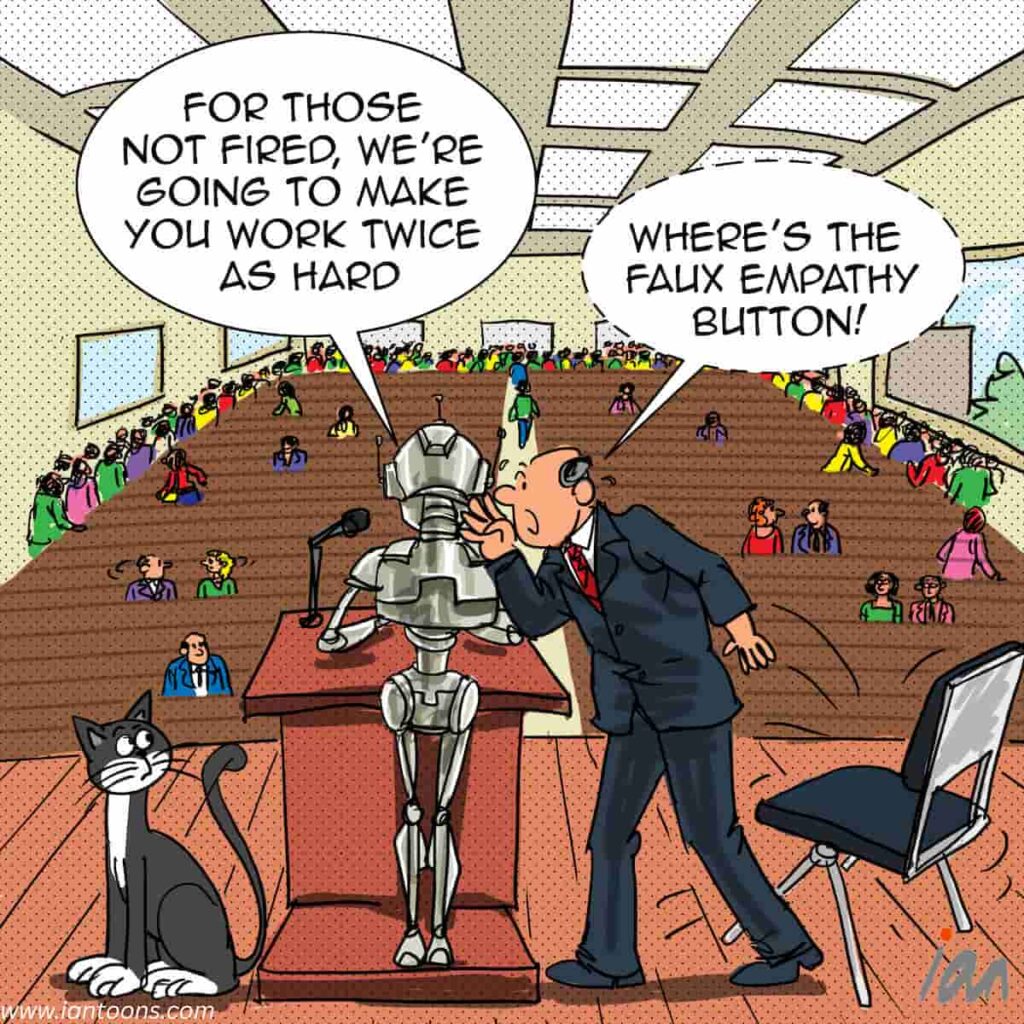
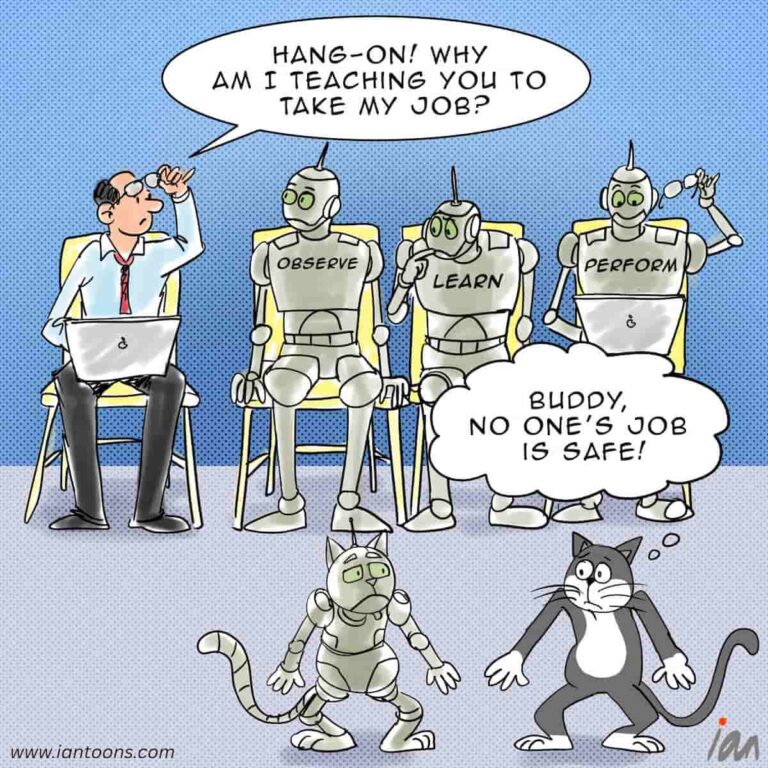
“Faux” – A cartoon that illustrates how companies will be needing to scale faux human resource-speak as AI layoffs gather pace.
A late-2025 study by Anna Queiroz at the University of Miami proved a point most workplaces quietly run on. Take someone, put them in a simulated performance review, and coach them on how to sound empathetic. Within minutes, they improve and start to use softer language, acknowledge feelings and hit all the right notes.
Which means empathy, at least the version we experience at work, is often just a performance. More a tone, with a set of phrases like “I understand,” “That must be difficult,” or “We value you.”
If that sounds familiar, it should … as it’s been the playbook of corporate Human Resource (HR) departments for decades. Corporate empathy has always been a strange ritual of carefully delivered concern followed by a decision that was already made. The words are soft, but the outcomes are not and we all agree to pretend otherwise.
Now AI is stepping in and doing the same thing, just better. Companies like Leena AI handle employee queries through conversational agents, while Workday is embedding AI across hiring and workforce management. Newer entrants like Artisan AI go further, positioning AI as a replacement for routine corporate roles.
In environments where most HR interactions are already templated, this isn’t disruption, it’s replacement for large swathes of the human resource team. Companies like IBM have already replaced HR roles with AI, while AI-native startups are being built with a fraction of the headcount, suggesting HR isn’t disappearing, it’s being compressed into software.
With tens of millions of roles expected to be displaced over the next decade, these AI agents replacing HR managers are about to get a lot of practice with their faux empathy.
17
1
1